See exactly what
you get for the money.
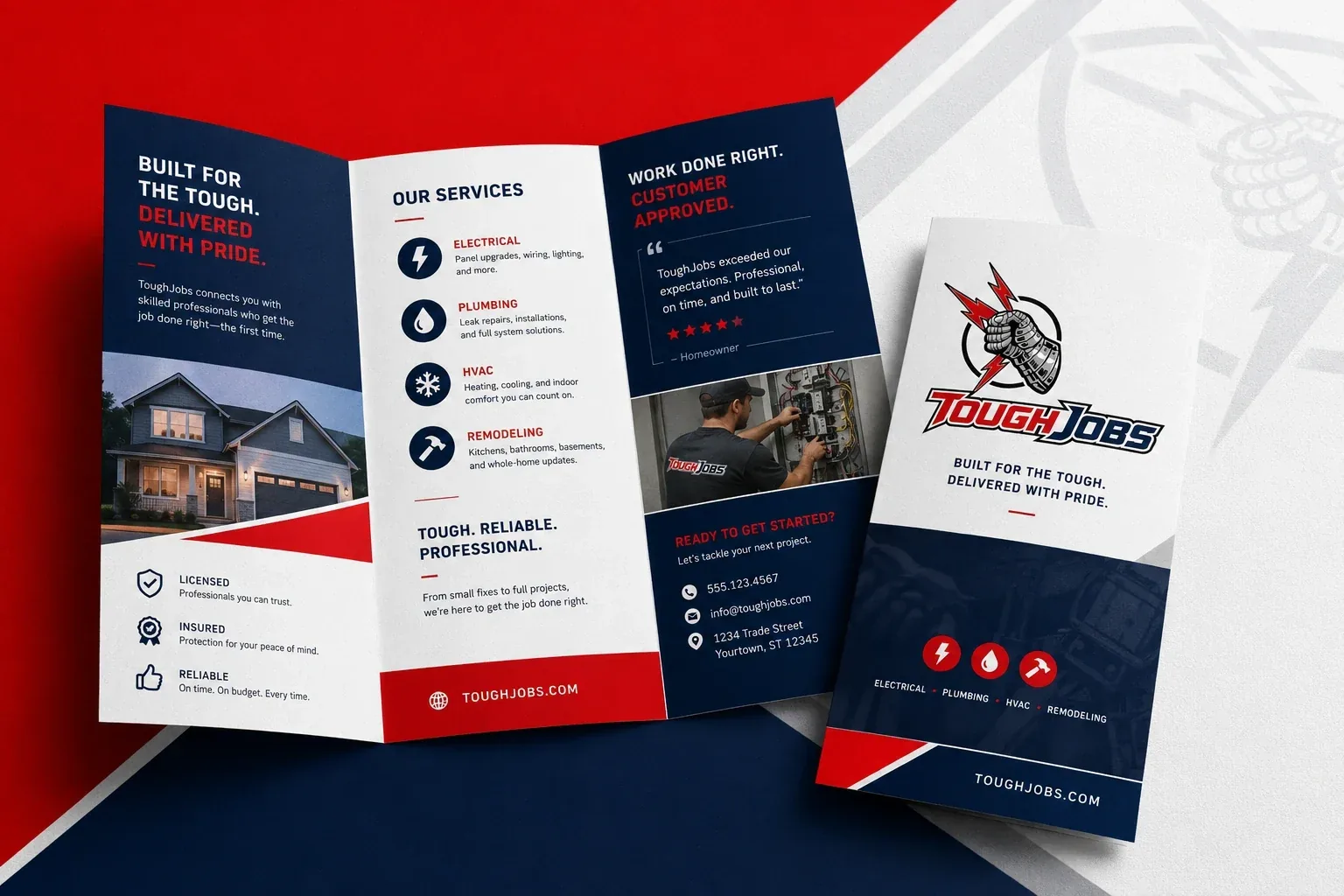
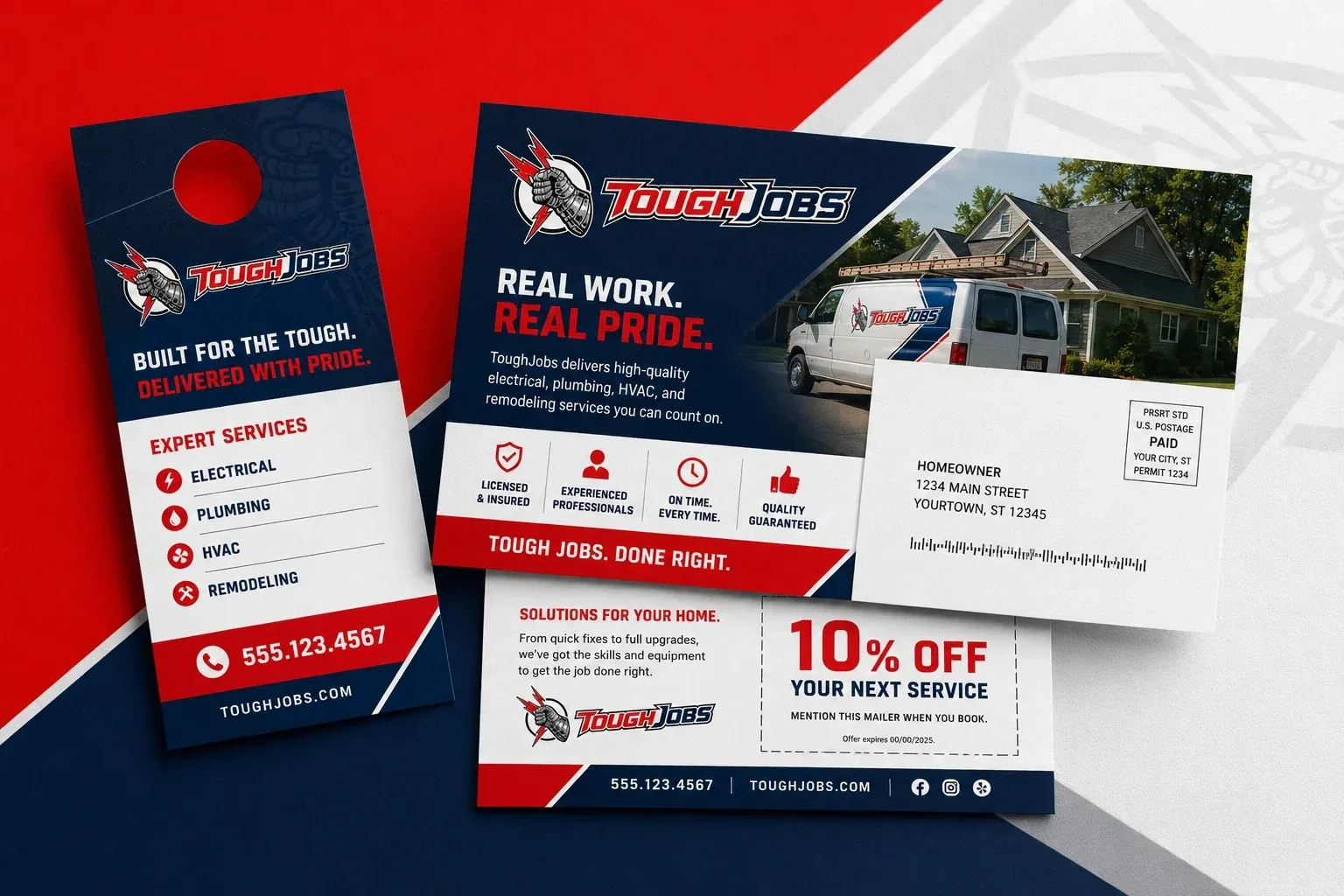
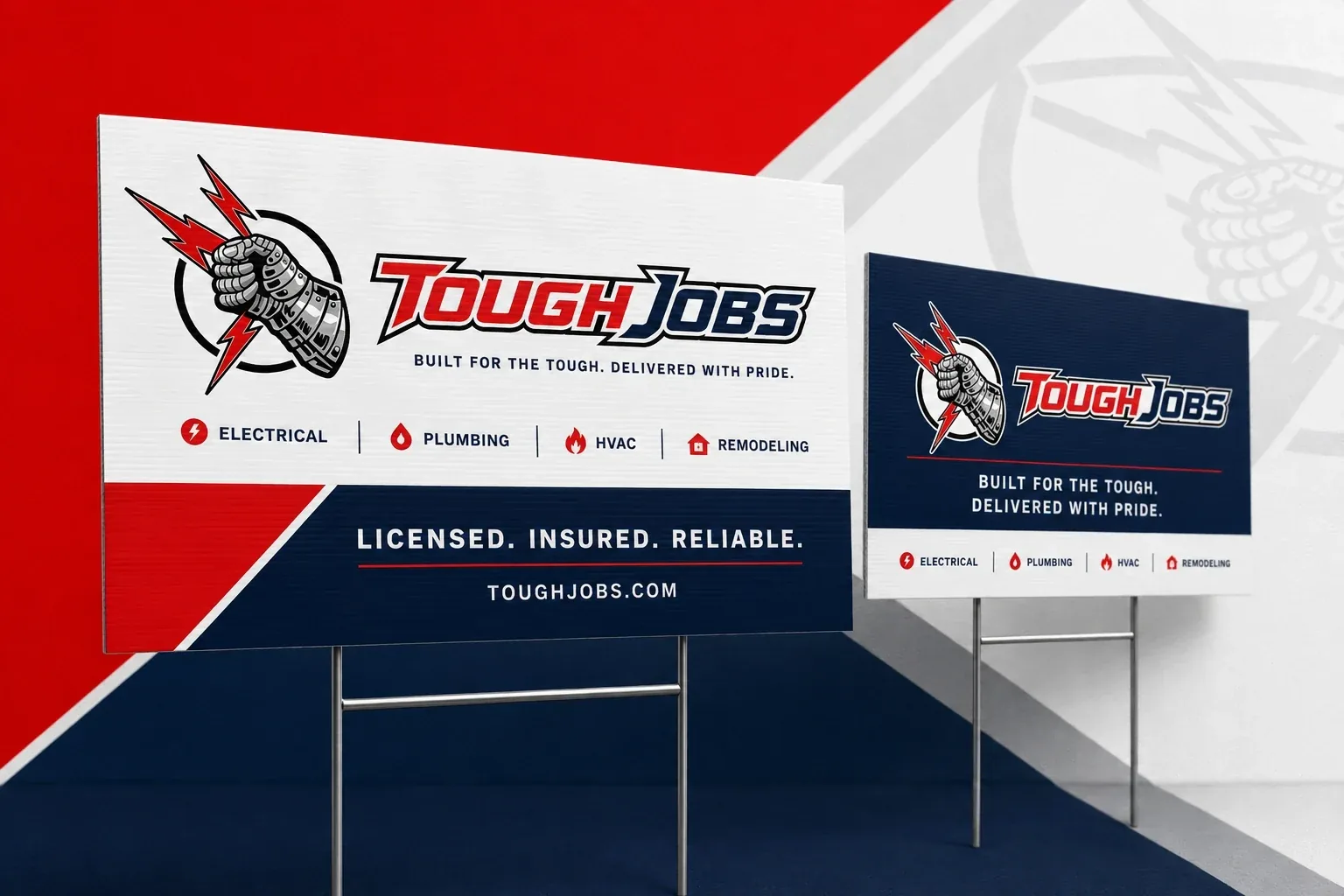
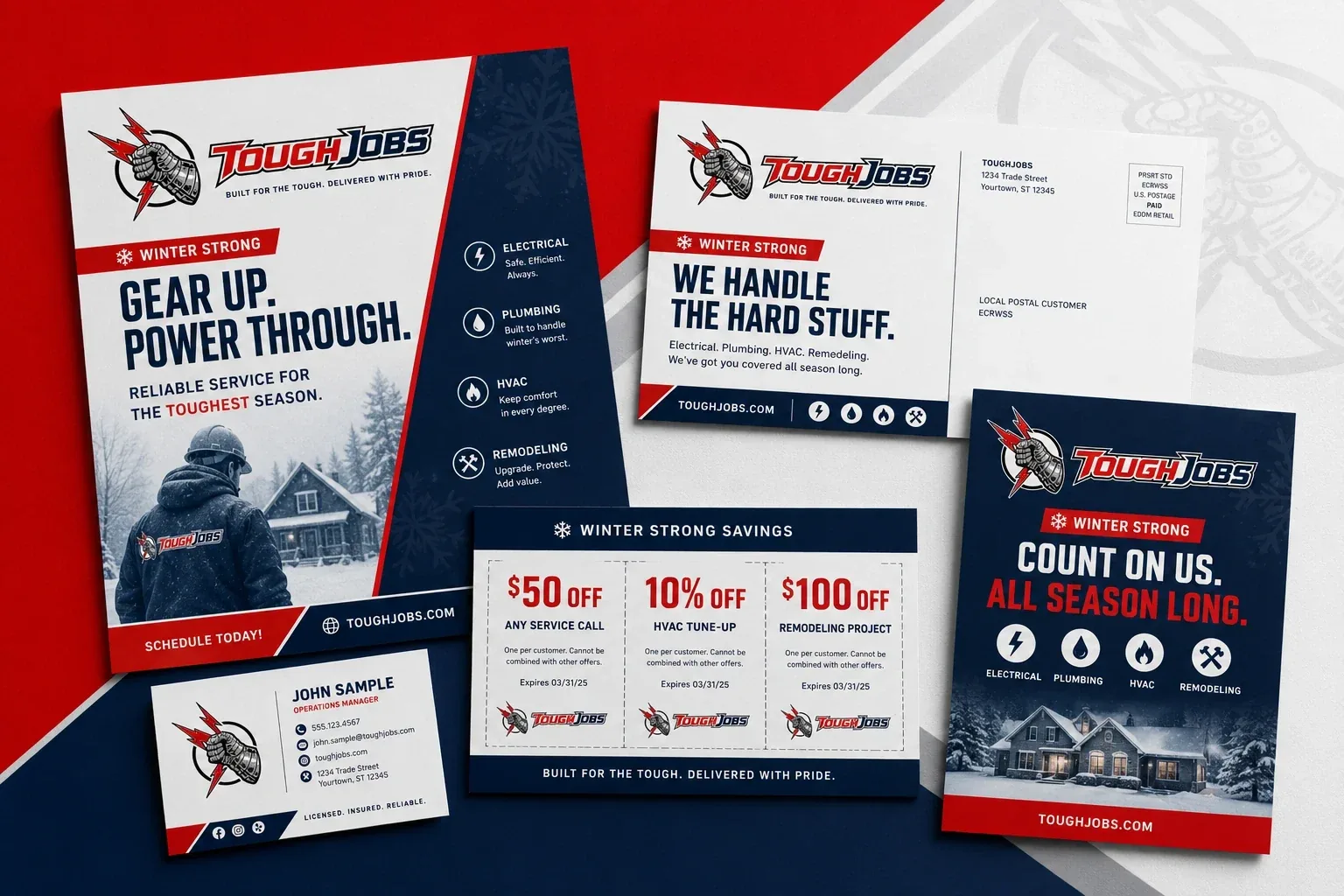
Real examples of the pieces in each package — so you know precisely what lands in your hands and your customers' before you spend a dollar.
Company Clothing
Branded polos, hoodies, hats, tank tops, and ball caps for your crew. Every piece turns them into walking billboards. We also do DTF transfers in place of embroidery — just verify the fabric type matches your application for best adhesion.




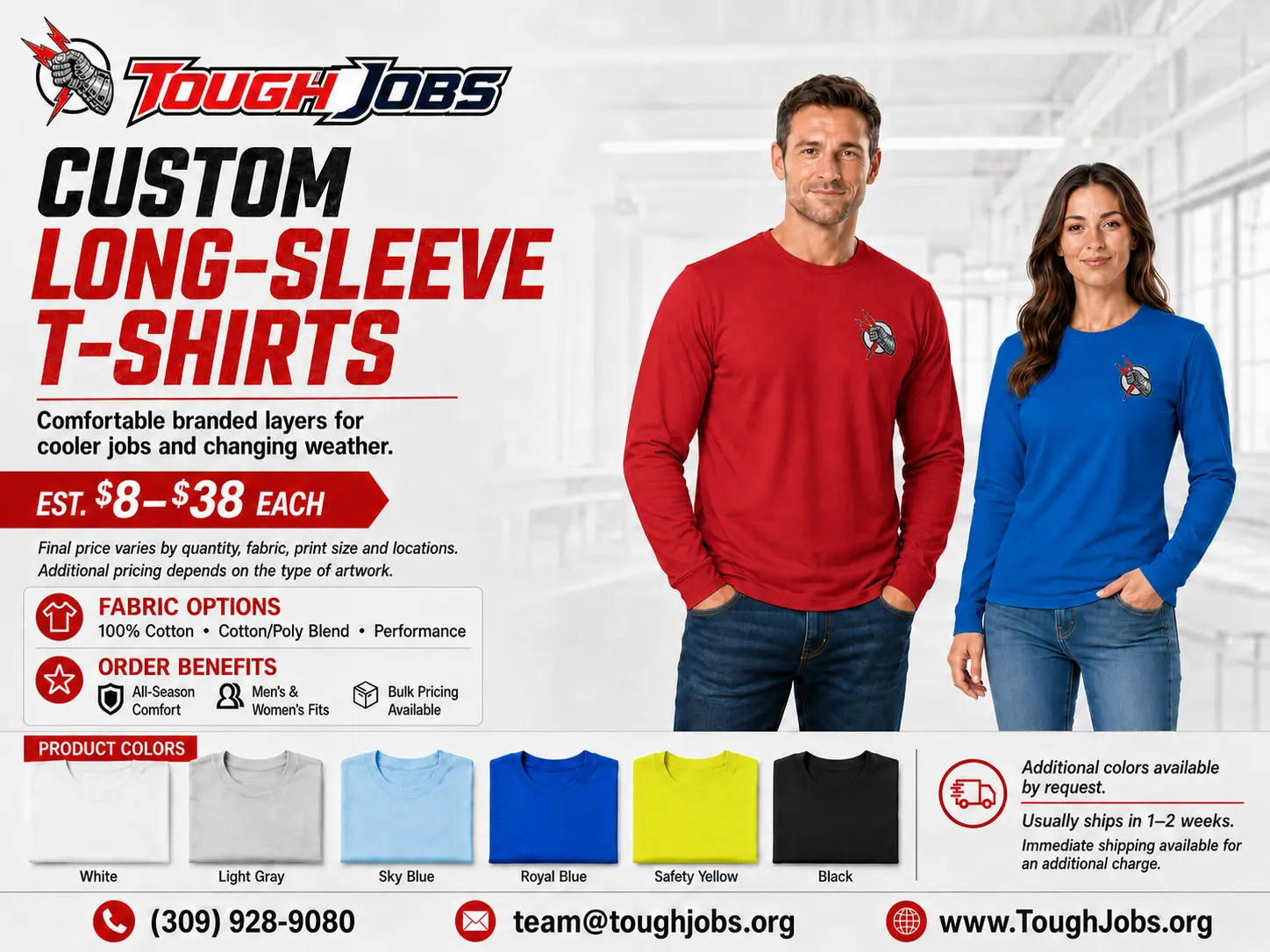




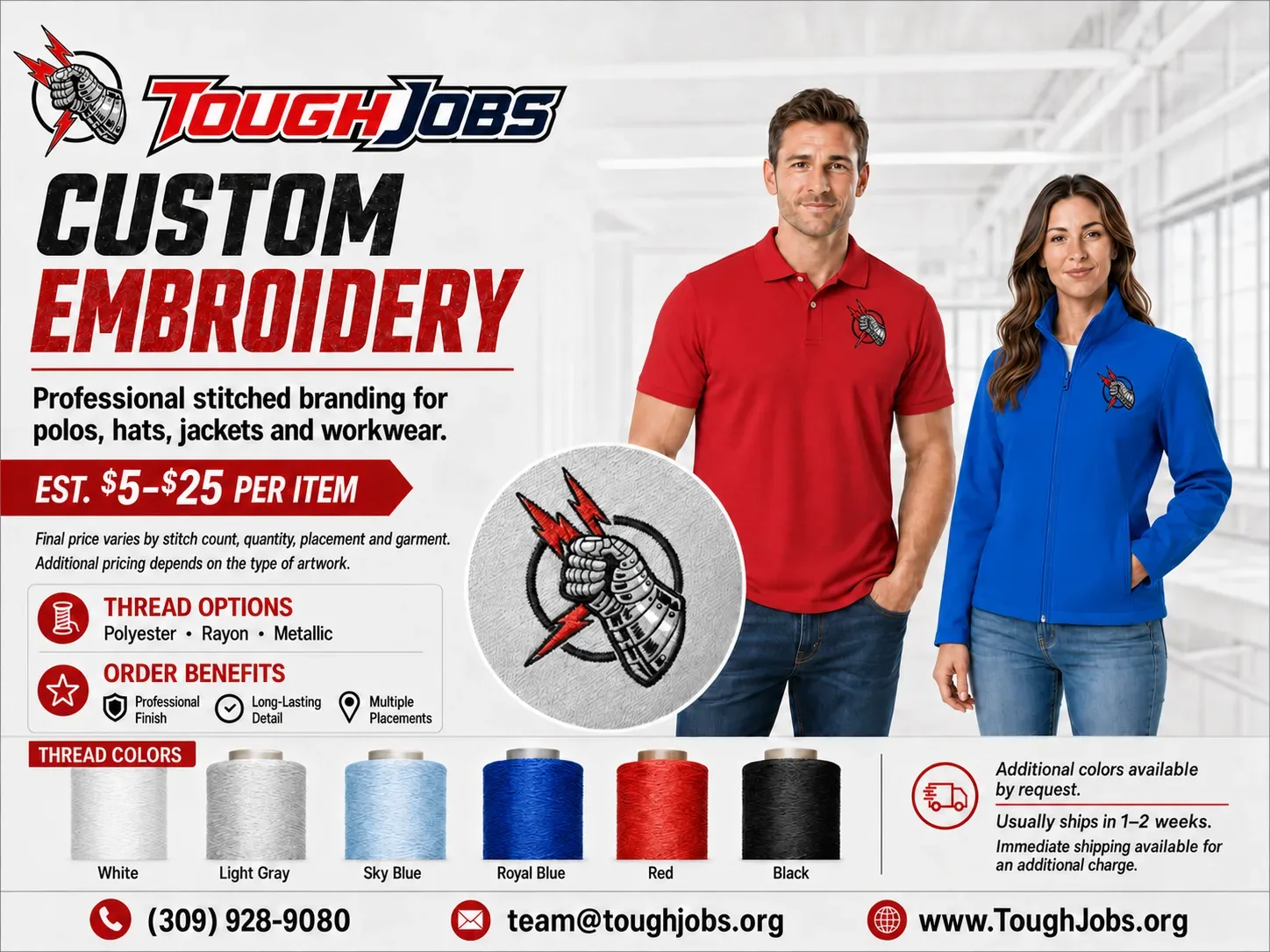


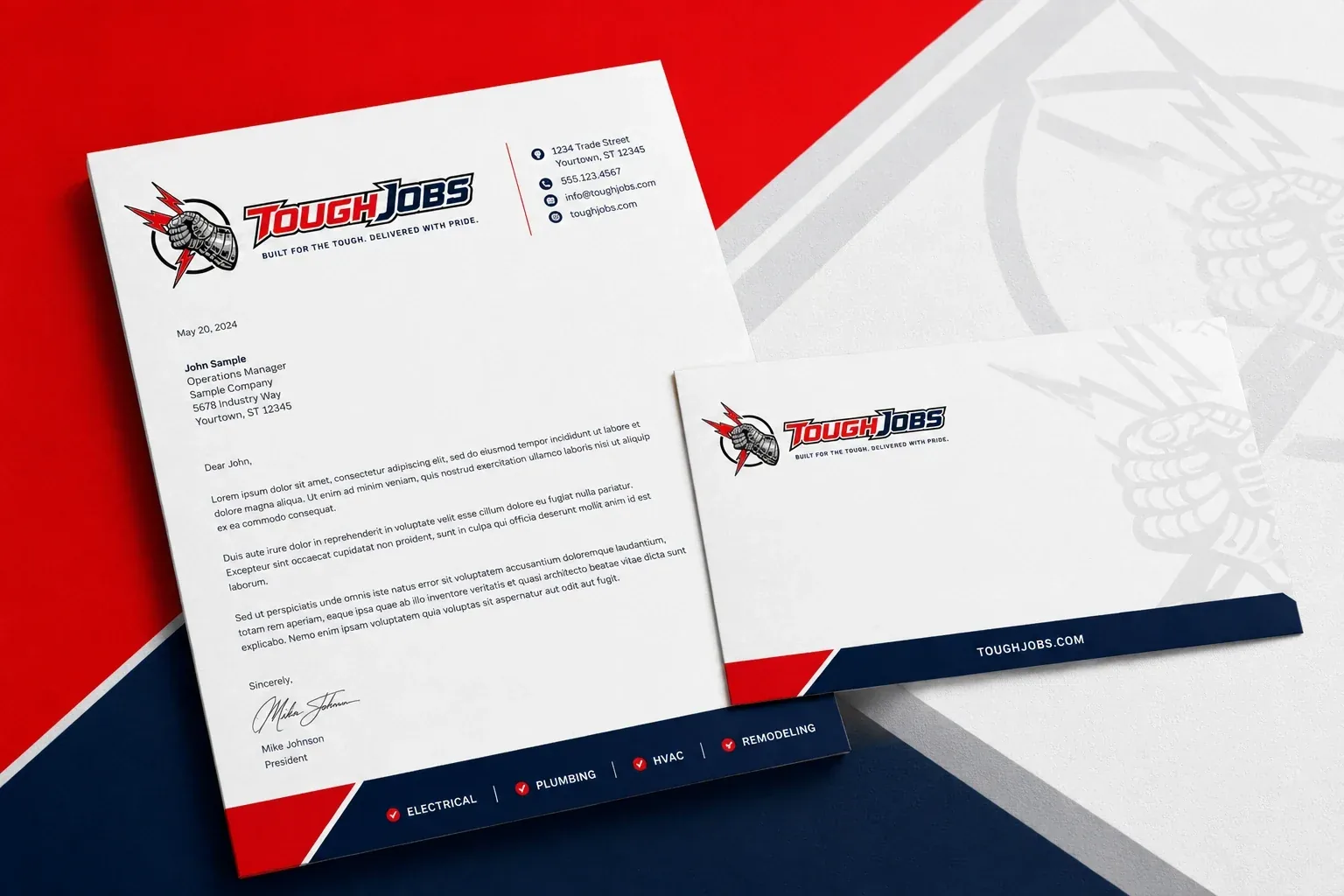
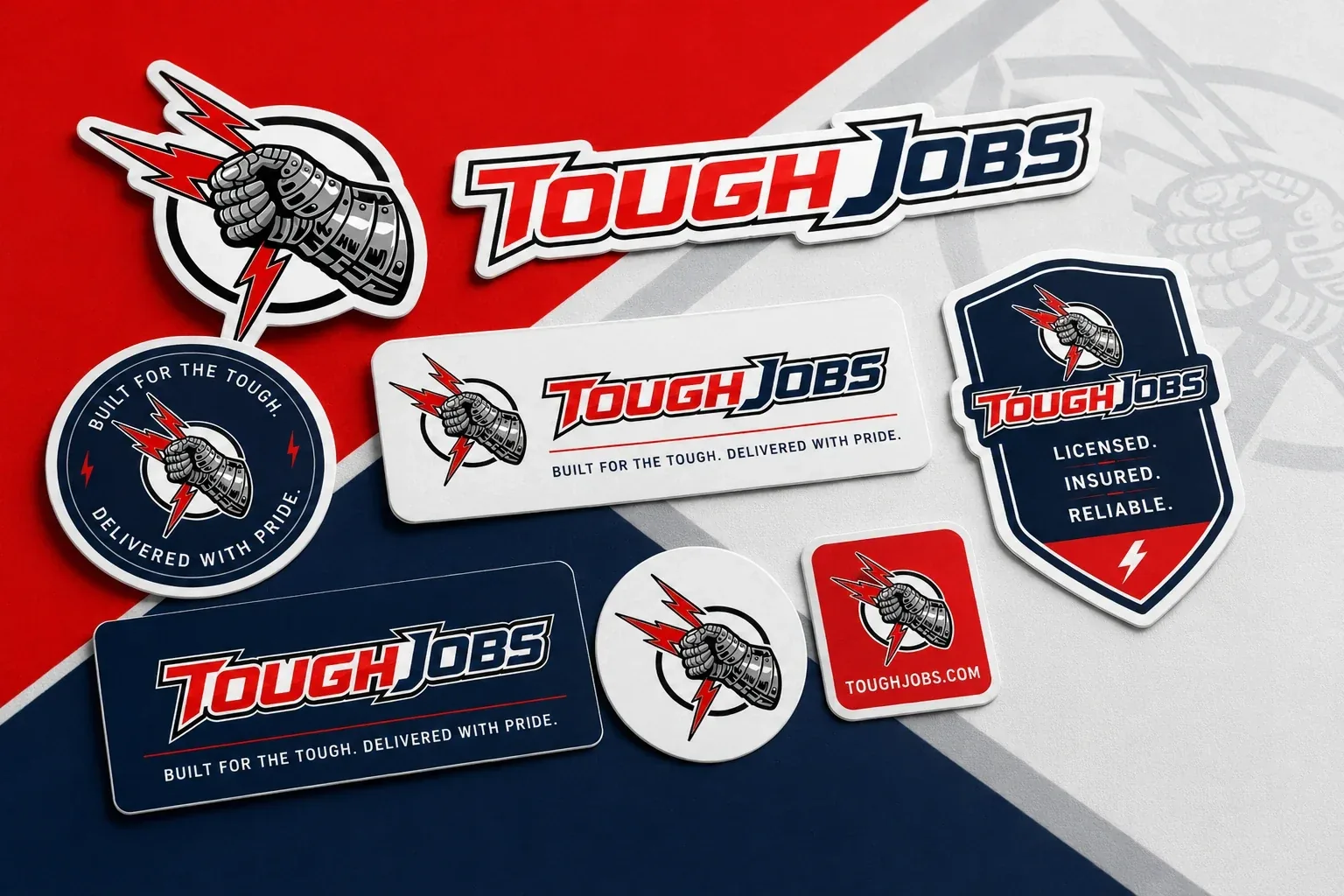
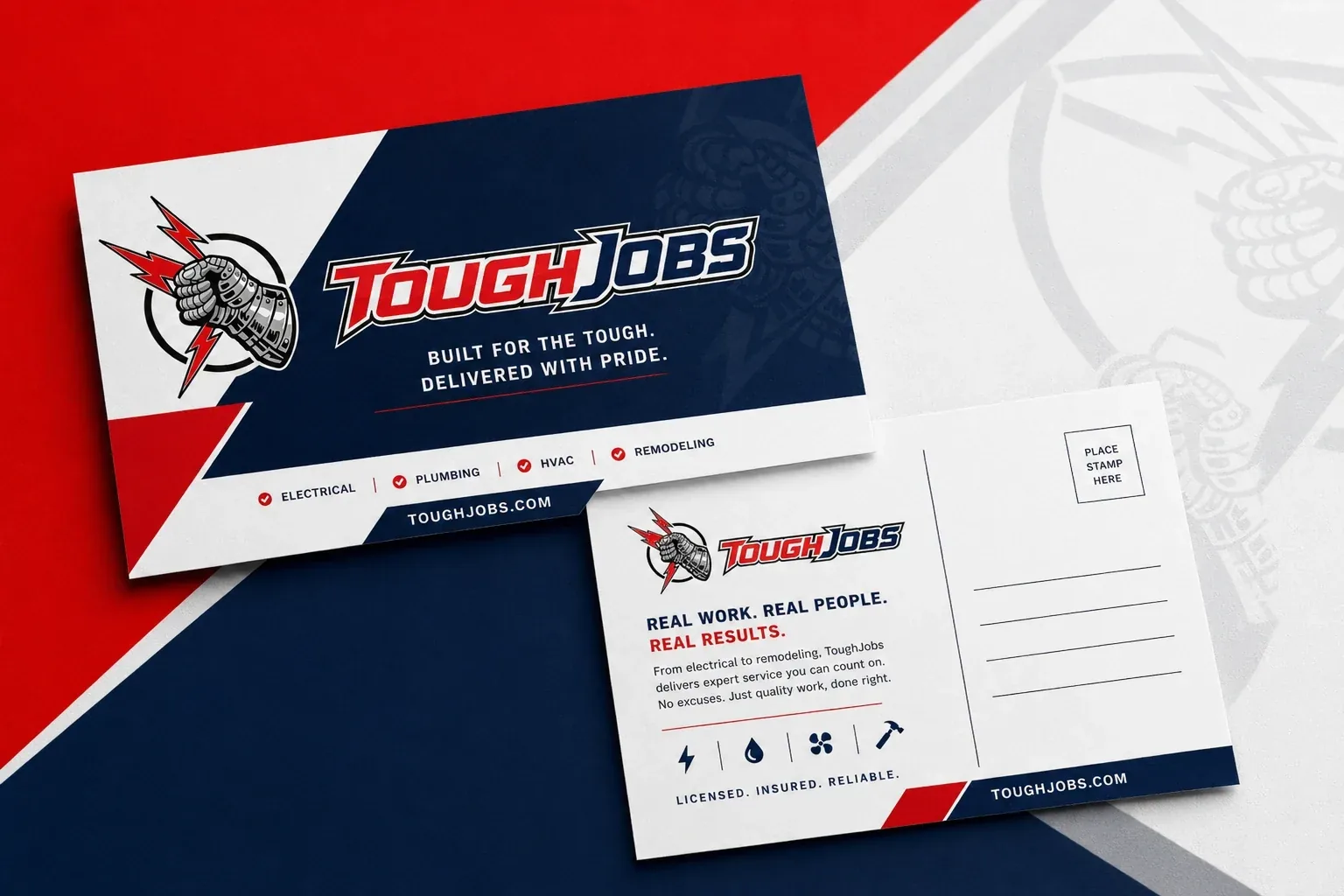
Brand Kit
The core matching set every trades business needs.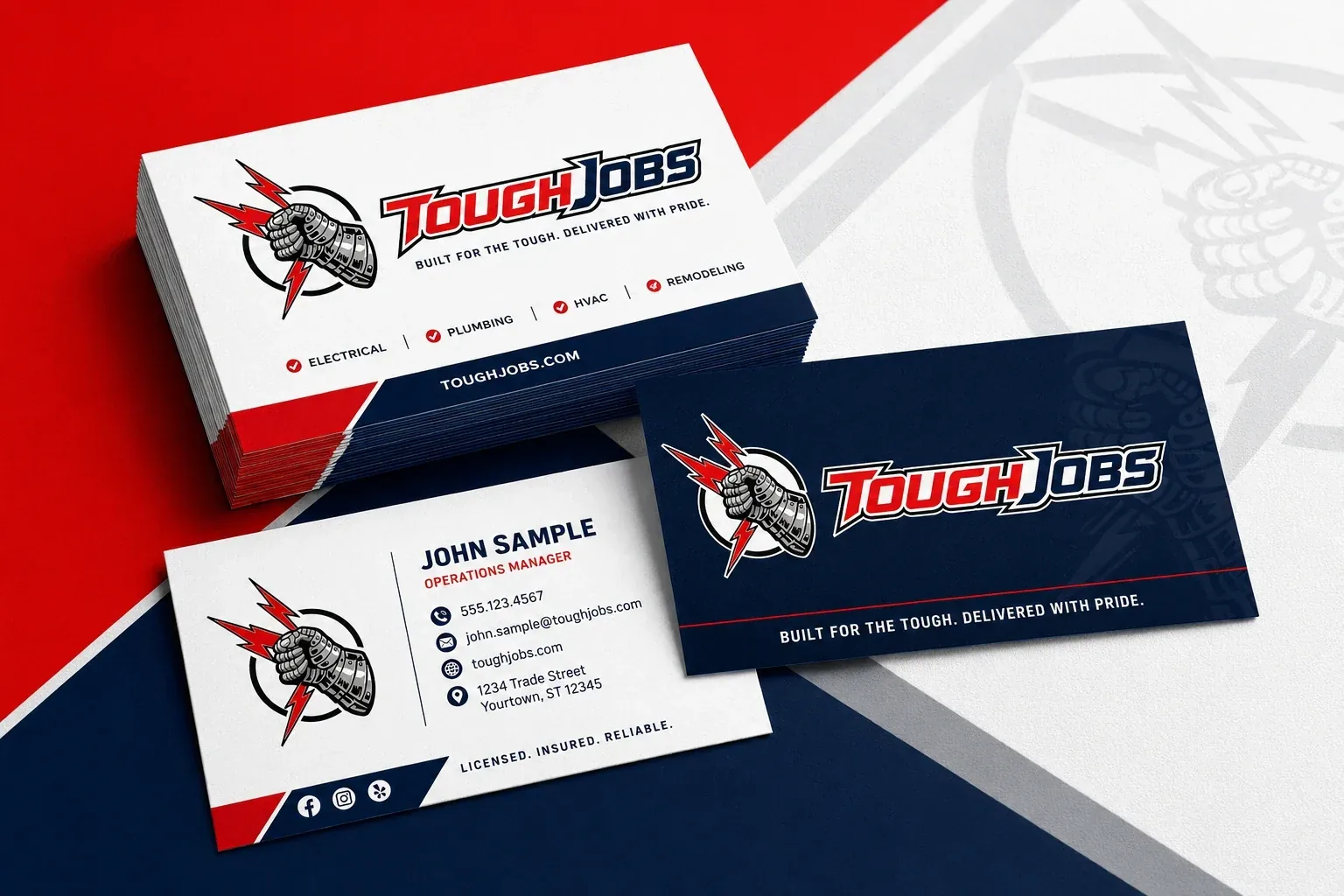
Direct-to-Film (DTF)
transfers done right.
DTF is the sharpest, most durable way to put your logo on a shirt — but it only performs on the right fabric. Here's what we use and why it matters.
How DTF actually works. A DTF print is a full-color design laid onto a film, then coated with a hot-melt adhesive powder. Under a heat press, that powder liquefies and drives down into the micro-fibers of the garment's face. As it cools it locks around each fiber — a mechanical bond, not just a coating sitting on top. That's why a good DTF transfer flexes, stretches, and survives wash after wash without cracking.
Why fabric is everything. The bond is only as good as the surface it grips. A smooth, dense, natural face gives the adhesive clean fibers to sink into. A rough or fuzzy surface — or one full of slick synthetic fibers — leaves the ink sitting high, where it can lift, crack, or let stray fibers poke through and dull the print.
Look for garments that advertise a 100% cotton face or an ultra-dense 30-singles thread weave. The flatter and tighter the knit, the better the adhesion.
Lane Seven LS14001 · Threadfast 320H
Both are engineered for modern apparel decorators. Their combed ring-spun cotton faces give an incredibly flat, hairless surface, so the DTF film bonds perfectly without rough polyester fibers poking through the ink.
High-polyester performance hoodies like the Badger 1454 — unless you use a specialized low-bleed adhesive backing. High press heat can cause synthetic polyester dyes to gas out, migrating into and discoloring your design.