Junk Removal Website Example
This junk removal website example shows how a service homepage can organize accepted items, exclusions, load or quote method, access, service area, and scheduling. The annotated mockup calls out readability, local search context, proof, and the path to request junk removal. It is a concept example, not a client case study or a claim that one layout guarantees results.
Why this site works
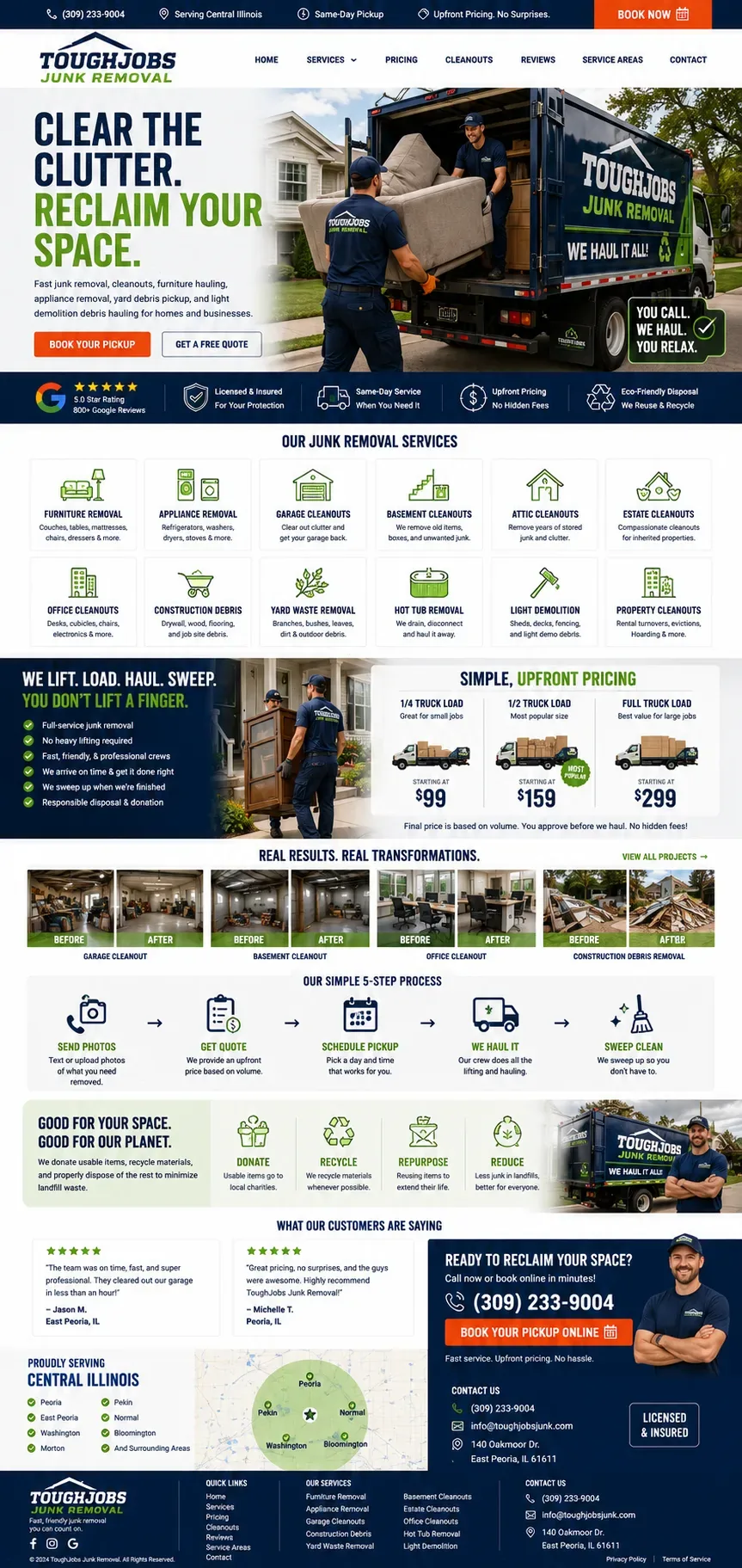
Book-your-pickup CTA up top — the fastest way to get rid of it.
Headline promises relief: clear the clutter, reclaim the space.
Every cleanout type is named so searches match the exact job.
Upfront truck-load pricing kills the biggest fear: surprise costs.
"We lift, you don't" section removes the labor objection fast.
Before/after cleanouts prove the transformation without a visit.
The pickup button repeats again right before they leave the page.
Junk Removal website design: from search to action
This junk removal website example is organized for the moment when a customer plans a cleanout or needs items removed quickly. The layout gives the visitor a quick route through accepted items, exclusions, load or quote method, access, service area, and scheduling. Its annotations explain the design decisions; they are not performance claims or a substitute for real client evidence.
Match the search moment
When a customer plans a cleanout or needs items removed quickly, the visitor has a practical problem. The copy should lead with accepted items, exclusions, load or quote method, access, service area, and scheduling and keep the path to request junk removal visible without repeating the same button after every sentence.
Reduce uncertainty with real details
The design makes room for real cleanouts, trucks, disposal approach, and transparent service rules. Those details help a customer judge fit while giving search engines clearer service context.
Design notes from the annotated homepage
- Book-your-pickup CTA up top — the fastest way to get rid of it.
- Headline promises relief: clear the clutter, reclaim the space.
- Every cleanout type is named so searches match the exact job.
- Upfront truck-load pricing kills the biggest fear: surprise costs.
- "We lift, you don't" section removes the labor objection fast.
- Before/after cleanouts prove the transformation without a visit.
- The pickup button repeats again right before they leave the page.
Want a site like this for your trade?
We will build you a homepage engineered for calls — not just looks.
Junk Removal website FAQ
Each category below jumps straight to the matching answers, so you're not scrolling past questions that don't apply to you. Want the complete list instead? Open the full FAQ hub underneath.