Garage Door Website Example
This garage door website example shows how a service homepage can organize repair versus installation, door or opener types, coverage, and call routing. The annotated mockup calls out readability, local search context, proof, and the path to schedule garage door service. It is a concept example, not a client case study or a claim that one layout guarantees results.
Why this site works
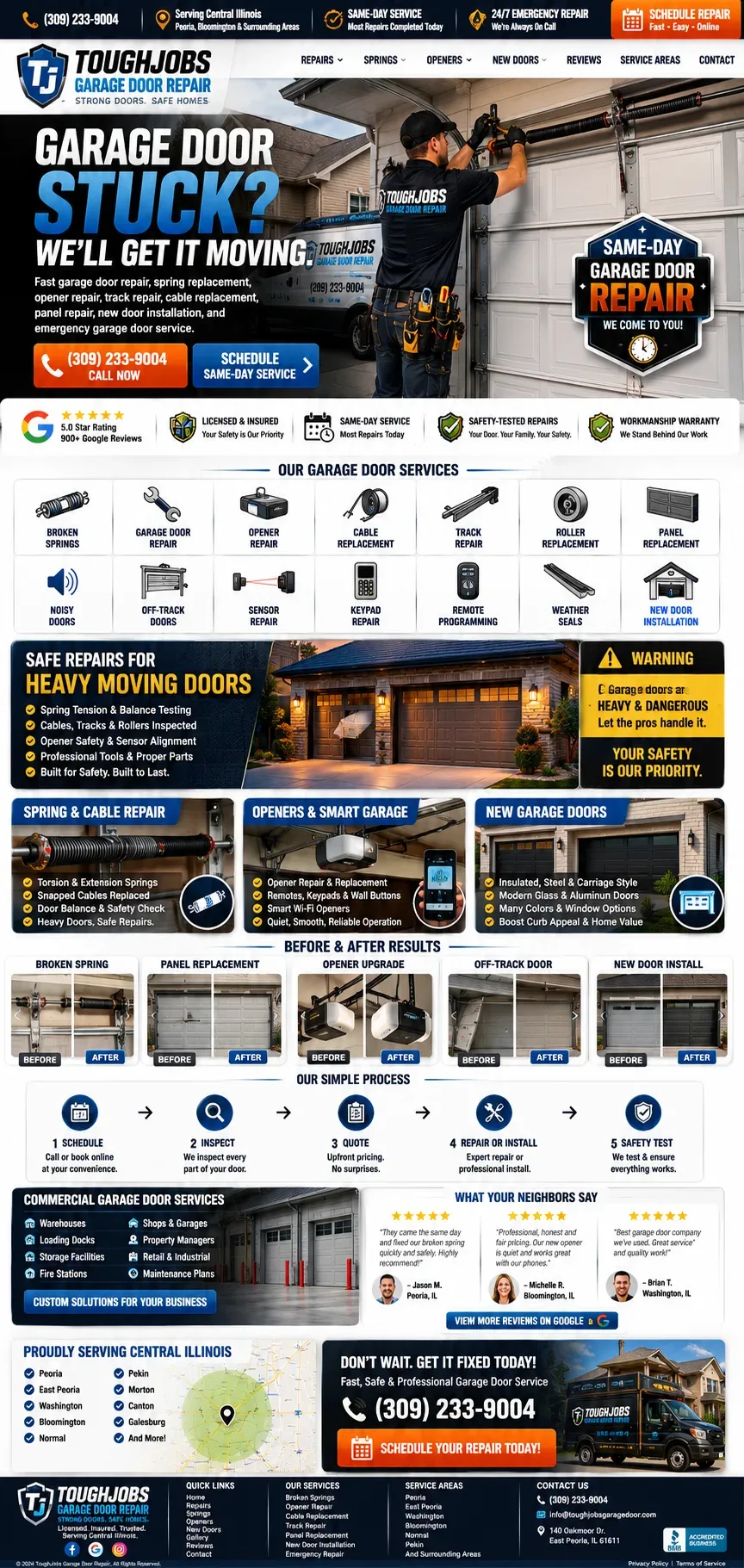
Phone number stays visible up top — one tap to call.
Clear headline says exactly what you do, right away.
Local service-area names help Google rank you nearby.
Trust badges & Google reviews cut hesitation fast.
Scannable service cards — customers find it fast.
Real reviews build confidence right before the call.
The call-to-action repeats before they lose interest.
How should a garage door website guide the visitor?
This garage door website example is organized for the moment when a customer needs repair, opener service, or replacement. The layout gives the visitor a quick route through repair versus installation, door or opener types, coverage, and call routing. Its annotations explain the design decisions; they are not performance claims or a substitute for real client evidence.
Start with fit, then earn the call
A customer needs repair versus installation, door or opener types, coverage, and call routing before choosing to schedule garage door service. The design should make that sequence easy to scan on a phone and should not hide important limits in decorative sections.
Use evidence the business can verify
For this trade, strong evidence can include real installations, technician identification, service details, and warranty terms when offered. The production site should label concept images and publish only reviews, credentials, warranties, and outcomes the business can support.
Design notes from the annotated homepage
- Phone number stays visible up top — one tap to call.
- Clear headline says exactly what you do, right away.
- Local service-area names help Google rank you nearby.
- Trust badges & Google reviews cut hesitation fast.
- Scannable service cards — customers find it fast.
- Real reviews build confidence right before the call.
- The call-to-action repeats before they lose interest.
Want a site like this for your trade?
We will build you a homepage engineered for calls — not just looks.
Garage Door website FAQ
Each category below jumps straight to the matching answers, so you're not scrolling past questions that don't apply to you. Want the complete list instead? Open the full FAQ hub underneath.