
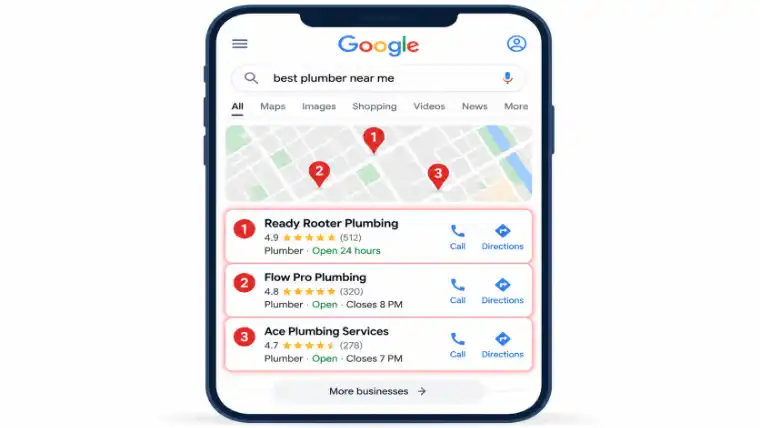
When a homeowner searches "electrician near me," Google answers with three businesses in a box above the regular results — pinned to a map. That box is the map pack, and for a home-service business it is the single most valuable piece of real estate on the internet. The three companies in it get the calls. Everyone below the fold fights for scraps. Here is how to rank higher locally and earn your spot in it.
First, Understand What the Map Pack Actually Rewards
Google ranks the local map pack on three factors: relevance, distance, and prominence. Distance you can't change — your shop is where it is. Relevance and prominence are where the work happens, and both are almost entirely within your control. Relevance is how well your business profile matches what the searcher typed. Prominence is how well-known and trusted Google believes you are, measured through reviews, citations, and links. Rank higher locally by attacking those two levers relentlessly, in that order.
Set Up Your Categories the Way Google Reads Them
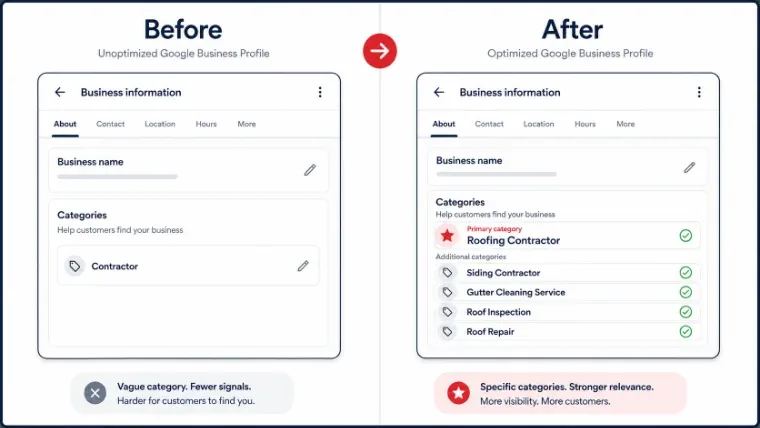
Your primary category on your Google Business Profile is the strongest single relevance signal you have. Setting up categories correctly is the fastest win most trade businesses are leaving on the table. Pick the most specific primary category that describes your core service — "Roofing Contractor," not the vaguer "Contractor" — then add every legitimate secondary category that reflects a service you actually perform.
How to choose categories that rank
- Set your primary category to your highest-margin, highest-intent service — it carries the most weight
- Add secondary categories for every real service line, but never list one you don't perform
- Check what your top-ranking competitors use as their primary category, then decide if you can compete or need a more specific angle
Add Every Service — Individually, With Descriptions
Beneath categories, Google lets you list individual services, and adding services one by one is a relevance signal most competitors ignore. Don't stuff everything into one line. Create a separate service entry for each job you do — "Water Heater Repair," "Drain Cleaning," "Sewer Line Replacement" — and give each a plain-language description that names the problem the homeowner is searching for. This is how you show up for the specific search, not just the generic one.
What a strong service entry looks like
- One entry per service, matching the words a homeowner would actually type
- A two-to-three sentence description that names the symptom and the fix
- Consistent naming between your profile services and the service pages on your website
Prominence Is Built on Reviews and Consistency
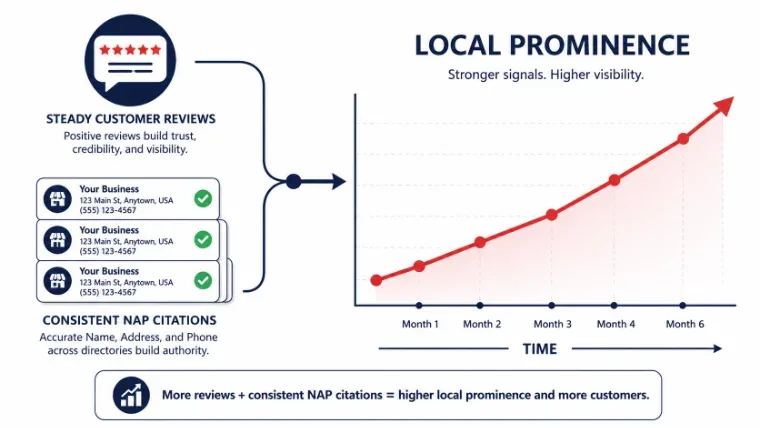
Once relevance is dialed in, prominence decides who wins. The two biggest prominence signals are a steady flow of recent, detailed reviews and consistent business information — your name, address, and phone number — appearing identically everywhere online. A single wrong phone number on an old directory can quietly hold you back. Audit your citations, fix the mismatches, and build a simple system to ask every satisfied customer for a review the day the job is done.
Use Niche Backlinks to Prove You're the Real Deal
Links still matter, but for local ranking the right links beat a pile of random ones. Using niche backlinks — links from sources tied to your trade and your town — is what separates a business Google trusts from one it merely tolerates. A link from the county home-builders association, the local chamber of commerce, a supplier's "where to buy" page, or a regional trade directory carries far more weight for a plumber in Peoria than a generic national blog ever could.
Where trade businesses earn links that count
- Local business associations, chambers of commerce, and BID directories
- Supplier and manufacturer "find a pro" or "certified installer" pages
- Sponsorships of local teams, events, and charities — most link back from a sponsors page
- Trade-specific directories your customers and suppliers actually use
This Is Where Experience Beats Theory
Everything above works because it maps to how Google actually weighs local results — and because it reflects what we've seen move the needle across real home-service accounts, not a checklist copied from a generic blog. Categories and services fix relevance. Reviews, consistent citations, and niche backlinks build prominence. Do them in that order, keep at it, and the map pack stops being luck and starts being a system. If you'd rather have someone run that system for you, our local SEO service is built around exactly this playbook.